Coaching
What we
work on
Sessions cover specific, practical skills — the kind that improve how you come across when you speak. Below is an overview of the areas most commonly addressed in coaching.
Core Skills
Delivery & communication skills
Organizing ideas before speaking
Many people know what they want to say but struggle to put it in an order that makes sense to a listener. Sessions practice the habit of finding a clear through-line before opening your mouth.
Presentation structure
Building a presentation that flows — from a strong opening to a clear close — without overloading every slide or losing the audience halfway through.
Clearer delivery
Articulation, projection, and making sure the most important parts of what you say actually register with the people listening.
Pacing
Speaking too fast is the most common issue. Work on slowing down, using pauses intentionally, and matching your pace to the complexity of what you're saying.
Reducing filler words
"Um," "uh," "like," "you know" — these habits are hard to hear in yourself. Sessions help you notice them and replace them with silence or a cleaner transition.
Vocal clarity
Volume consistency, avoiding trailing off at the end of sentences, and keeping your voice clear when nerves or dry air make it difficult.
Explaining complex ideas simply
Breaking down technical or detailed information so that someone without your background can follow it. Useful for presentations to mixed audiences or leadership.
Audience engagement
How to read a room, adjust when you're losing people, ask questions that invite real responses, and keep attention without performing.
Specific Contexts
Situation-specific practice

Speaking on camera
Video calls and recorded presentations have their own challenges: no live audience feedback, awkward eye contact with a lens, and the temptation to look at yourself on screen. Sessions address the specific habits that make on-camera speaking feel more natural.
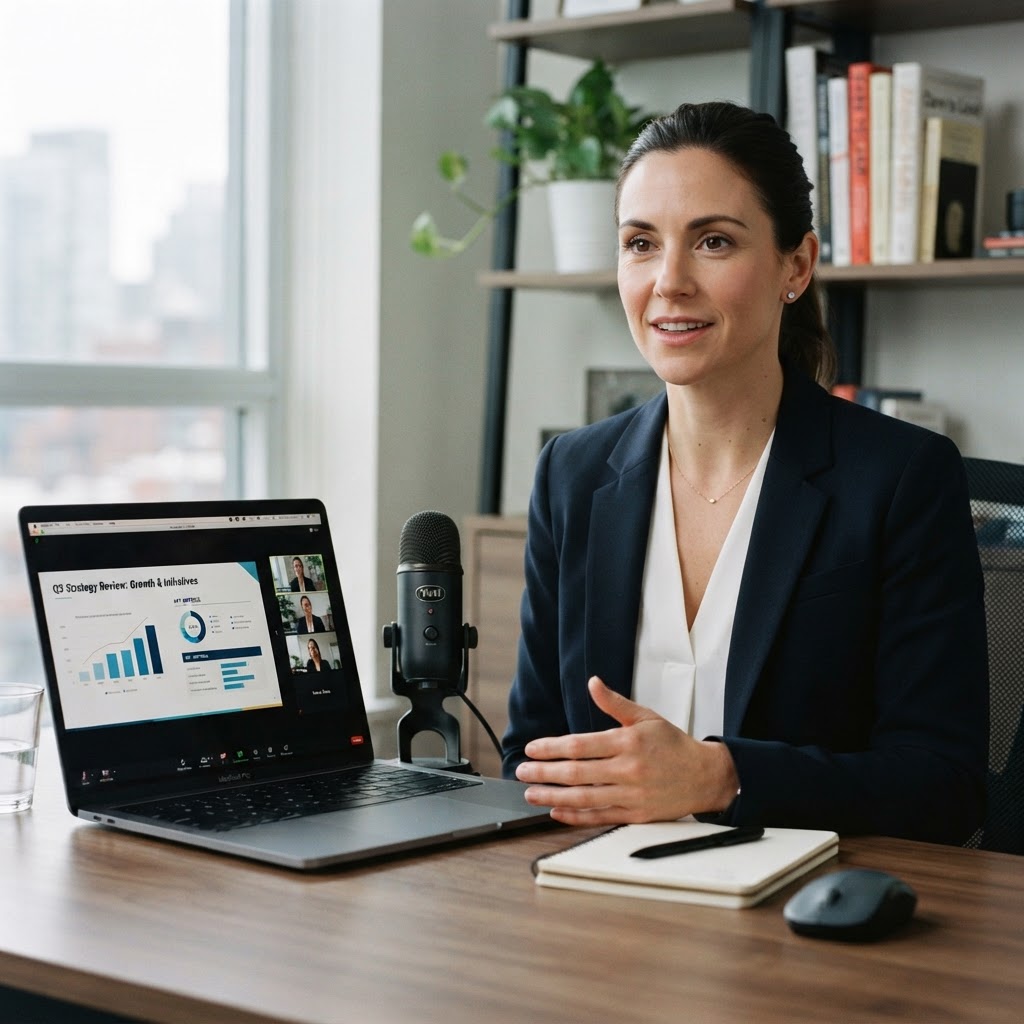
Virtual presentations
Presenting to a grid of small faces — or worse, a grid of black boxes — requires adjustments in pacing, energy, and structure that don't come naturally. Sessions simulate that environment and work through what changes.

Meeting participation
Knowing when to speak, how to make a point without losing the thread, and how to hold the floor long enough to finish a thought — all practical meeting skills that can be practiced in a session.

Prepared speeches
Run through a prepared talk, identify where it slows down, where the language is too dense, and where delivery needs more intention. Repetition with feedback is more useful than memorization alone.
A note on scope
Boldmouth offers educational coaching and practice — not therapy, psychological treatment, or clinical services of any kind. Sessions are focused on practical communication skills. If you have concerns about anxiety or related conditions, please consult a qualified mental health professional.
Next Step
Ready to improve your delivery?
Tell Juan what you're working on and he'll follow up to plan a first session.